Consulting & co-engineering

We clarify technical feasibility, optimise CNC manufacturing processes and provide support from the first drawing to the series-ready solution.

Polymeca supports you in the development of precision parts and assemblies suitable for manufacturing. We evaluate technical requirements, tolerances, geometries and materials, and develop solutions that excel in design, manufacturing and series production.

The most important points

  • Clarify technical requirements
  • Realistically assess tolerances
  • Implement design-to-cost
  • Design components for series production

Your personal contact
Pascal Frei
Pascal Frei
Dept. Manager Sales & Project Management
+41 71 727 37 72
+41 79 775 46 45

This is how consulting & co-engineering works at Polymeca

1. Clarify requirements
We analyse technical requirements, tolerances, quantities and framework conditions. In doing so, we clarify the functional goals and series production-relevant requirements for the component or assembly.
2. Evaluate component and process
Our specialists check geometries, machining possibilities, tolerances, materials, surface requirements and subsequent assembly steps. Critical issues are identified early and evaluated with realistic alternatives.
3. Develop a CNC manufacturing concept
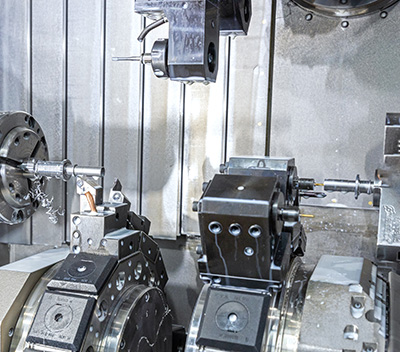
We develop the appropriate manufacturing concept for milling, turning, grinding, surface technology or assembly of components. This includes process sequences, clamping, testing steps and relevant interfaces.
4. Implement design-to-cost
We optimise components and processes for economical series production. In doing so, we reduce unnecessary complexity, utilize automation potential, and design processes to ensure functionality and quality.
5. Secure a production-ready solution
After technical approval, we will support the transition to the next project phase. Decisions are documented, outstanding issues are resolved, and the foundation for a reliable series production process is laid.

Consulting & co-engineering expertise at Polymeca

Polymeca brings over 100 years of experience in high-precision manufacturing to the early project phase. Our specialists work with you to determine whether a component is designed for manufacturability and which process chain is technically and economically viable.

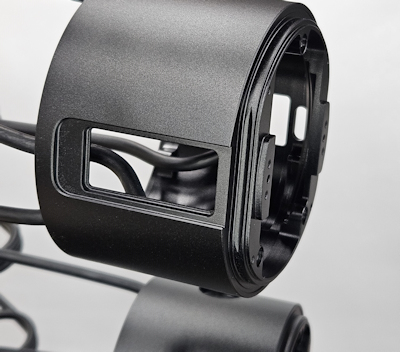
The focus is on precision parts and complex assemblies with high demands on dimensional accuracy, surface finish, process reliability and production costs. Polymeca considers the individual part, surface finish, measurability, assembly and subsequent function as an interconnected process chain.
Design-to-cost for economical mass production

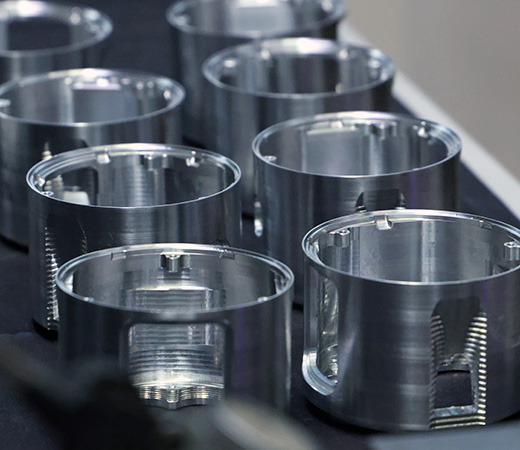
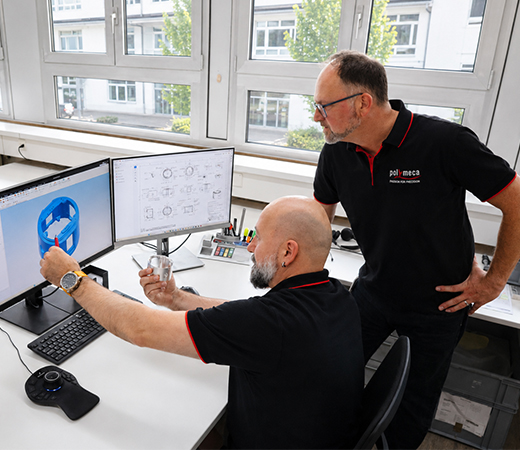
At Polymeca, design-to-cost means consistently designing components and processes with a focus on function, quality and cost-effectiveness. We examine which requirements are technically necessary and where cost drivers can be reduced without compromising functionality.

A high degree of automation is central to this process. Automated feeding, processing, testing and further processing reduce non-productive time and improve cost-effectiveness throughout the entire product lifecycle.
Co-engineering for assemblies

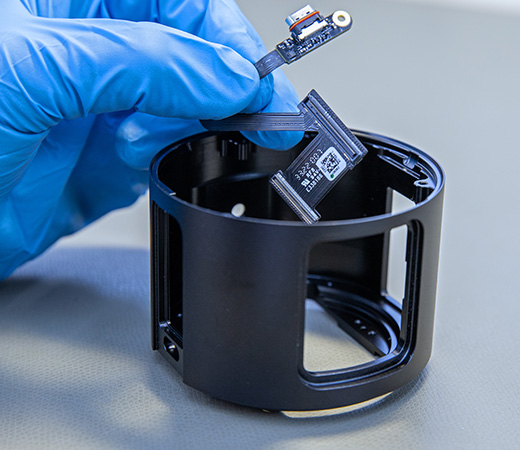
In assemblies, individual parts, tolerance chains, interfaces and functional tests interact. Polymeca therefore considers assemblies as a complete system from the outset. This allows assembly effort, testing steps and subsequent modifications to be taken into account early on.
One-stop shop provides an engineering advantage

Polymeca combines precision mechanics, surface technology, measurement technology and assembly of components under one roof. This allows us to identify dependencies across the entire process chain.

Surface treatment can influence dimensional accuracy. An assembly requirement influences tolerance chains. Subsequent functional testing influences the measurement strategy. These aspects converge in co-engineering.

Facts about consulting & co-engineering

Scope of services
Technical consulting, feasibility assessment, CNC manufacturing concepts, design-to-cost, design for manufacturing, process optimisation, series production support
Consulting focus areas
Tolerances, geometries, tool access, clamping concepts, material selection, surface requirements, measurement strategy, assembly capability, process stability
Results for customers
Reliable feasibility study, manufacturing-oriented component design, economical process concept, basis for decision-making in series production

«Good co-engineering brings manufacturing knowledge into the design from the very beginning. This facilitates components that function technically and can be manufactured efficiently, reproducibly and economically.»

Harald Hug

Project Manager

Discuss the project and check feasibility

If you need to evaluate a manufacturing partner or check the feasibility of a component, we clarify technical feasibility, tolerances and processes efficiently and thoroughly.

Frequently asked questions about consulting & co-engineering

What does consulting and co-engineering at Polymeca include?
Polymeca evaluates tolerances, geometries, materials, surface requirements and measurability. The goal is a manufacturable concept for cost-effective series production.
When should Polymeca be involved in a development project?
Polymeca should be involved early on, before drawings, tolerances and materials are finalised. This phase offers the most effective opportunity to avoid cost drivers, process risks and subsequent production problems.
What does design-to-cost mean at Polymeca?
Design-to-cost means designing components and processes in such a way that function, quality and cost-effectiveness are aligned. Polymeca examines tolerances, geometries, clamping systems, materials and process steps for their impact on series production costs.
Does Polymeca also provide support for existing components or manufacturing processes?
Yes. Polymeca analyses existing components, drawings or manufacturing processes and identifies technical and economic optimisation potential. This includes adjusted tolerances, more stable clamping concepts, optimisation of machining options and more economical process sequences.
Why is co-engineering important for assemblies?
In assemblies, tolerances, interfaces, assembly processes and functional tests all interact. Co-engineering helps to identify these dependencies early and reduce the need for later adjustments.
What sets Polymeca apart from other service providers?
Polymeca combines engineering with its own manufacturing capabilities. The consulting services are based on series production experience in CNC manufacturing, surface technology, measurement technology and assembly of components. This results in solutions that work in everyday production.

Precision mechanics technologies

Precision turning
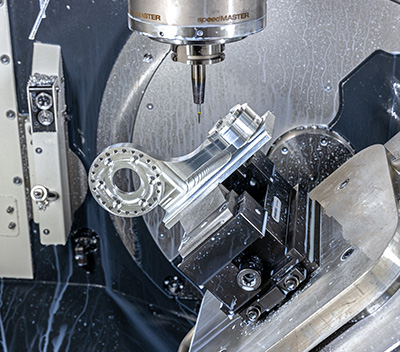
CNC turning for complex geometries with tolerances down to 5 µm. Efficient manufacturing from bar stock or in chucks with high process reliability. Read more

Precision milling

CNC milling for demanding components made from block material or cast blanks. Automated processes ensure repeatability and stable series production. Read more

Precision grinding

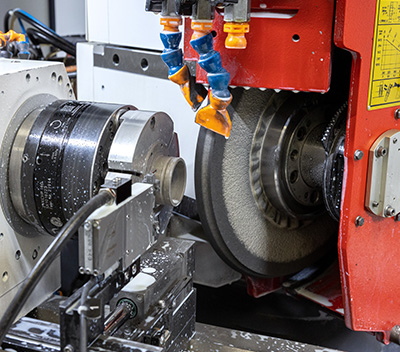
CNC circular grinding for maximum precision below 1 µm. Stable processes running on stand-alone systems or in automated manufacturing cells and in 24/7 operation. Read more

Surface engineering technologies

Anodising
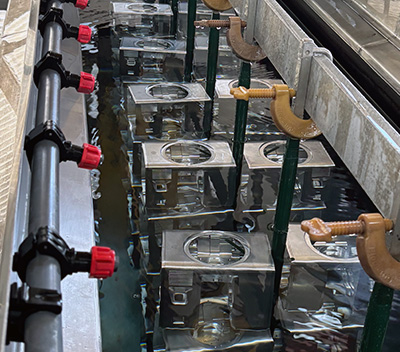
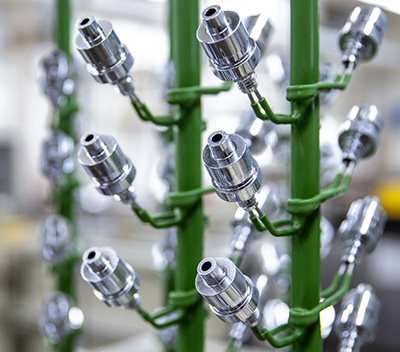
Dimensionally accurate anodising of aluminium using the GS-process provides corrosion protection, wear resistance and improved adhesion. Read more

Passivation

Passivation of aluminium with SurTec 650 for corrosion protection, high electrical conductivity and good adhesion. Read more

Electroplating

Electroplating of metallic components with functional and decorative layers for protection, conductivity and appearance. Read more

Powder coating

Robust powder coating for long-lasting protection, high resistance and modern surfaces. Read more

Wet painting

Flexible wet painting for more complex geometries, variable layer thicknesses and versatile colour and gloss level selection. Read more

Additional processes

Ultrasonic cleaning, barrel finishing, blasting, laser processing, pad printing and pad electroplating complement the surface technology. Read more
Scroll to Top