Assembly of components

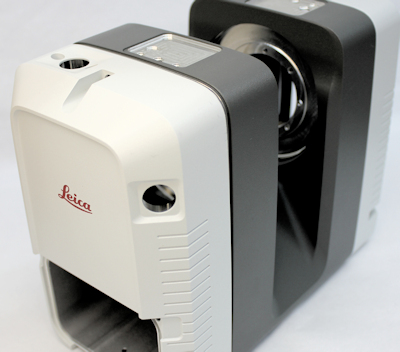
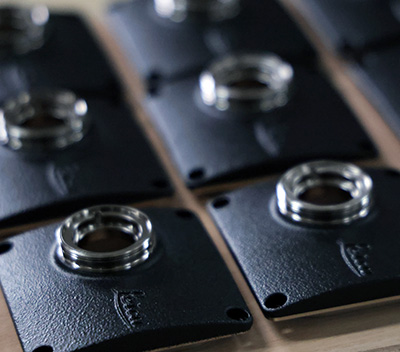
We assemble mechanical, electromechanical and optical components with in-house manufacturing, procurement, testing and inventory management.

Polymeca combines precision mechanics, purchased parts, assembly and testing into one seamless process. The focus is on functional assemblies, clear responsibilities and proven quality for demanding series production projects.

The most important points

  • Mechanical, electromechanical and optical assemblies
  • In-house manufacturing and procurement of purchased parts
  • Inventory management for recurring series
  • Assembly in an ESD-protected area
  • Functional, leak and endurance tests
Your personal contact
Pascal Frei
Pascal Frei
Dept. Manager Sales & Project Management
+41 71 727 37 72
+41 79 775 46 45

This is how component assembly works at Polymeca

1. Clarify requirements
We clarify function, interfaces, quantities, testing requirements, purchased parts and logistical framework conditions. In doing so, we examine which assembly and testing strategy is suitable for the assembly.
2. Co-ordinate production and procurement
Polymeca co-ordinates internally manufactured precision parts, purchased parts and inventory management. Mechanical processing, surface technology and assembly are also co-ordinated.
3. Define the assembly process
We define assembly sequence, tools, test fixtures, bonding processes, ESD requirements and relevant test characteristics. The goal is a stable process for recurring assemblies.
4. Assemble the components
Experienced assembly personnel assemble mechanical, electromechanical and optical components according to defined specifications. Adhesive bonding technology, electrical testing, and force and flow measurements are used as needed.
5. Check the function and hand over
Polymeca tests relevant functions and documents the results. Depending on the assembly, this includes leak tightness, functionality, endurance testing, electrical testing or customer-specific test characteristics.

Component assembly expertise at Polymeca

Polymeca handles the assembly of components as an integrated part of the manufacturing chain. Internal precision mechanics, purchased parts, warehouse management, assembly, testing and documentation can be directly co-ordinated.

The focus is on assemblies with high demands on precision, function, interfaces and consistent series quality. Polymeca reduces co-ordination efforts, consolidates responsibility and delivers verified results from a single source.
Procurement and inventory management

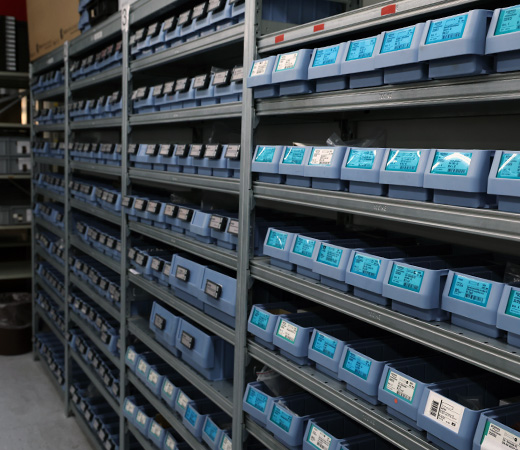
In addition to internal manufacturing, Polymeca also handles the procurement of purchased parts and the inventory management for recurring assemblies. This reduces co-ordination efforts and ensures supply reliability in the series production process. Customers benefit from a single point of contact for manufacturing, purchasing, assembly and delivery.
Inspection and testing options

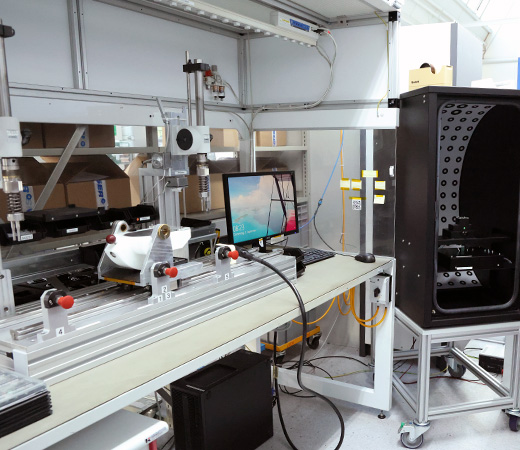
Polymeca is developing suitable testing facilities for assemblies. These include leak tests, functional tests, endurance tests, electrical tests, and force and flow measurements. Test fixture construction and measurement technology support the stable implementation of testing processes. This allows relevant functions to be verifiably validated before delivery.
ABOUT MEASUREMENT TECHNOLOGY

Assembly in an ESD-protected area

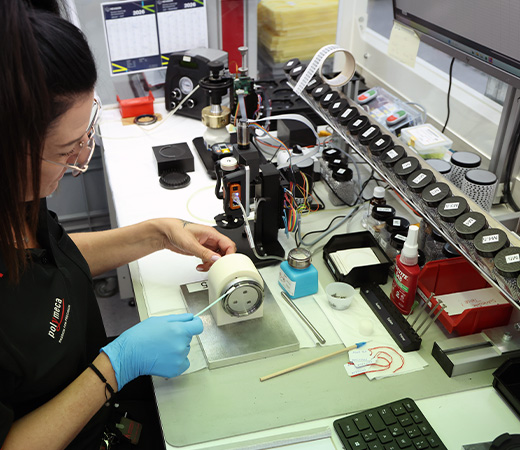
An ESD-protected area is available for sensitive electromechanical assemblies. This allows for the controlled assembly and testing of components. Experienced assembly personnel, defined procedures and appropriate tools ensure reproducible assembly.

Facts about assembly of components

Scope of services
Assembly, adhesive bonding, procurement of purchased parts, warehouse management, testing, test fixture construction
Assembly types
Mechanical, electromechanical and optical assemblies
Inspections
Leak tightness, function, endurance test, electrical testing, force measurement, flow measurement
Infrastructure
ESD-protected area, testing devices, experienced assembly personnel
Results for customers
Tested assemblies, fewer interfaces, clear responsibility and predictable series production

«Our aim is to combine precision parts from our own production and purchased components into assemblies that meet the technical and quality requirements of our customers.»

Christian Vetsch

Department Manager Industrial Service / Assembly

Clarifying the technical details of the assembly

Are you planning a mechanical, electromechanical or optical assembly? We efficiently and thoroughly clarify manufacturing, purchased parts, assembly, testing and series production.

Frequently asked questions about the assembly of components

Which components does Polymeca assemble?
Polymeca assembles mechanical, electromechanical and optical components. The focus is on industrial applications with high demands on precision, function and consistent series quality.
Does Polymeca also take purchased parts?
Yes. Polymeca handles the procurement of purchased parts and the inventory management for recurring assemblies. This allows for better co-ordination of manufacturing, assembly and delivery.
What tests are available for assemblies?
Depending on the assembly, leak tests, functional tests, endurance tests, electrical tests, as well as force and flow measurements are possible. Test fixtures are built on a project-specific basis as needed.
What does assembly in an ESD-protected area mean?
An ESD-protected area protects sensitive electronic components from electrostatic discharge. This is particularly relevant for electromechanical assemblies and sensitive components.
Why is in-house assembly of components an advantage?
Single-source assembly reduces interfaces, co-ordination efforts, and changes in responsibility. Polymeca combines manufacturing, procurement, assembly, testing and documentation in one seamless process.

Precision mechanics technologies

Precision turning
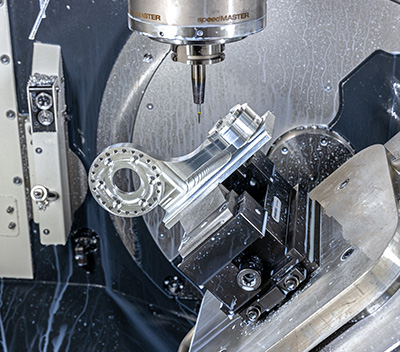
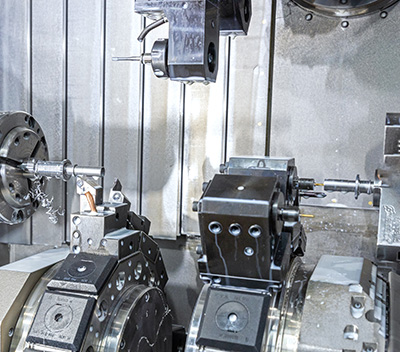
CNC turning for complex geometries with tolerances down to 5 µm. Efficient manufacturing from bar stock or in chucks with high process reliability. Read more

Precision milling

CNC milling for demanding components made from block material or cast blanks. Automated processes ensure repeatability and stable series production. Read more

Precision grinding

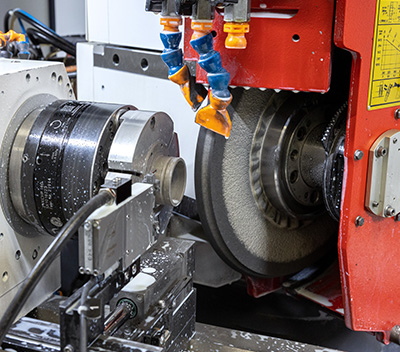
CNC circular grinding for maximum precision below 1 µm. Stable processes running on stand-alone systems or in automated manufacturing cells and in 24/7 operation. Read more

Surface engineering technologies

Anodising
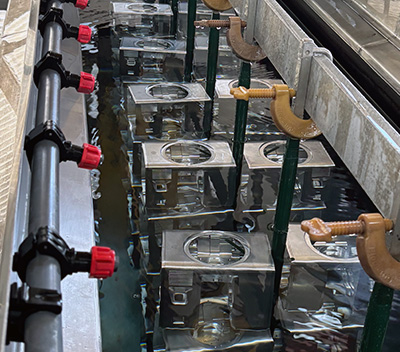
Dimensionally accurate anodising of aluminium using the GS-process provides corrosion protection, wear resistance and improved adhesion. Read more

Passivation

Passivation of aluminium with SurTec 650 for corrosion protection, high electrical conductivity and good adhesion. Read more

Electroplating

Electroplating of metallic components with functional and decorative layers for protection, conductivity and appearance. Read more

Powder coating

Robust powder coating for long-lasting protection, high resistance and modern surfaces. Read more

Wet painting

Flexible wet painting for more complex geometries, variable layer thicknesses and versatile colour and gloss level selection. Read more

Additional processes

Ultrasonic cleaning, barrel finishing, blasting, laser processing, pad printing and pad electroplating complement the surface technology. Read more
Scroll to Top