
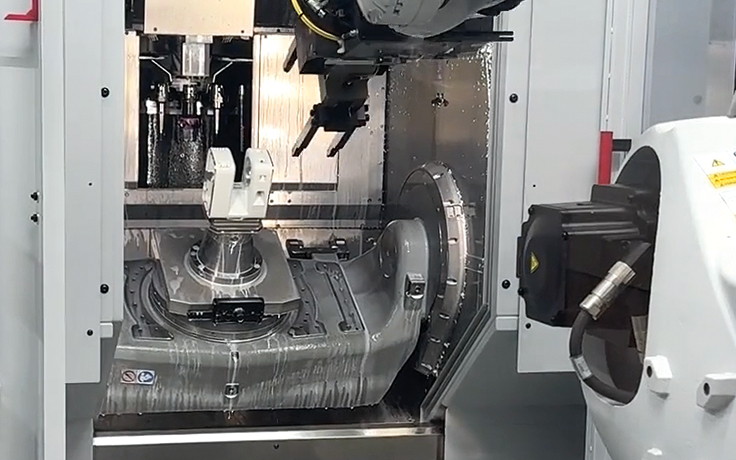
Efficient manufacturing results from the reliable synchronisation of material supply, processing and handling. This is precisely where automation at Polymeca comes in. It increases machine uptime, reduces downtime and supports reproducible component quality. For customers, this means greater predictability and cost-effective solutions for complex requirements.
What automation means for Polymeca
At Polymeca, automation encompasses far more than just individual automated machines. The interplay of several areas is crucial:
- Material supply
- Loading and unloading
- Processing
- Handling
- Data utilisation
Highly automated processing and handling systems enable largely autonomous production. The systems take over recurring processes and maintain stable manufacturing processes over extended periods.
How automation reduces downtime
Downtime often occurs not during processing, but in between, for example during loading, unloading, supplying material, or changing workpieces and pallets. Polymeca reduces these non-productive times with automated systems that continuously support the manufacturing process:
- Automatic turning and milling machines with bar feeders and automatic part removal
- 5-axis machining centres from Hermle with robot-based raw part and plate loading
- 5-axis machines from DMG with an automatic pallet changing system
- CNC grinding centres from Studer with fully automated robot cells
This ensures that material supply, handling and machine run times are better coordinated.
How automation enables autonomous manufacturing
Some production facilities at Polymeca are designed for unmanned multi-shift operation. They reliably continue production overnight and on weekends. This extends the usable production time and increases the availability of the lines.
Autonomous manufacturing only works with pre-planned, reliably coordinated processes. Automation reduces dependence on manual intervention and ensures that defined processes are reproducible.
How automation sustains quality
When dealing with complex requirements, speed is not the only factor that matters. Components must be manufactured efficiently and with consistent precision. Automated processes create stable and reproducible conditions for this.
This is evident, for example, in grinding technology. Polymeca uses CNC grinding centres from Studer, which are loaded and unloaded by fully automated robot cells. This ensures that the process remains controlled even during autonomous operation. Automated loading and unloading supports high process reliability and consistent grinding quality.
How process and machine data improve automation
Automation at Polymeca extends beyond the machine. Process and machine data such as availability, utilisation and efficiency are systematically recorded and analysed.
This data reveals where processes can be further improved. It supports the continuous optimisation of production and demonstrates how reliably systems run during normal operation.
What customers gain from this
For customers, there are four key benefits to automation:
- Less downtime, because material supply, loading and unloading are automated
- More reliable delivery dates, because systems are used productively for longer periods
- Reproducible component quality, because processes are stable and repeatable
- Economic solutions, because downtime is reduced and processes run more efficiently
This creates a clear added value, especially for complex components and high demands on delivery dates and component quality. Talk to Polymeca about where automation will have the greatest impact on your project.